Use up leftovers
What to Do With Leftover Mashed Potatoes: Crispy Potato Cakes
Turn cold leftover mashed potatoes into crisp, golden potato cakes in 20 minutes. An easy lunch or side made with what you already have.
- TIME
- 20 min
- SERVES
- 4
- ENERGY
- 230 cal
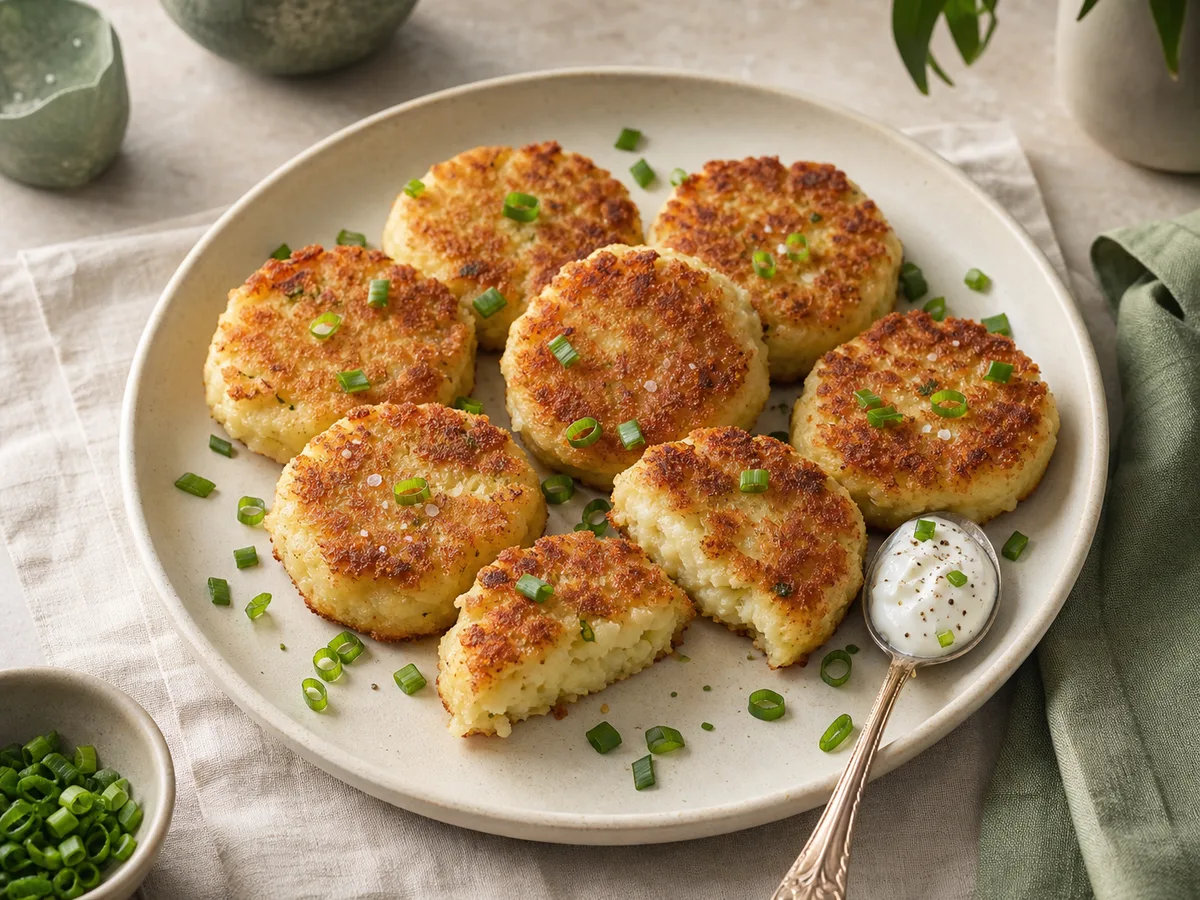
If you are wondering what to do with leftover mashed potatoes, skip reheating them into a sad echo of last night’s dinner. Cold mash has exactly the texture you need for crisp potato cakes: firm enough to shape, soft enough to stay fluffy in the middle.
This is a particularly useful recipe after a roast dinner or holiday meal. A cup of peas, a spoonful of chopped herbs, the end of a block of cheese, or a little cooked cabbage can all disappear into the mixture. In the UK, the same idea sits close to bubble and squeak; in the US, think of it as the easiest possible potato patty.
What makes the cakes stay together?
Start with thoroughly chilled mash. One egg binds the mixture and a small amount of flour absorbs excess moisture. Because every batch of mashed potatoes contains a different amount of butter and milk, treat the flour as an adjustment rather than a fixed rule. The mixture should feel soft but hold a flattened shape in your hand.
Serve them without another shopping trip
Top the cakes with a fried egg, spoon over leftover gravy, or serve them beside any vegetables that still need using. They also make a sturdy base for smoked fish, beans, or yesterday’s roast chicken. Refrigerate cooked cakes promptly and eat them within three to four days.
From fridge to table
How to make it
- 01
Mix the cold mashed potatoes, egg, cheese, flour, green onions, salt, and pepper. The mixture should hold its shape; add another spoonful of flour if it is very soft.
- 02
Divide into 8 portions, roll gently, and flatten each into a cake about 1.5 cm (½ inch) thick.
- 03
Heat the oil in a wide frying pan over medium heat. Add the cakes without crowding the pan.
- 04
Cook for 4–5 minutes per side until deeply golden and hot through. Let them sit for a minute before serving.